What the Machine Sees vs. What the Human Remembers
Masters thesis for Applied AI for Art and Design at Elisava. We are used to browsing archives by time, file type, and search. But what if potential connections come from complications or intersections of unrelated decisions? Complicator redefines AI for creative use, a chance to discover new perspectives from the visual media we already have. The machine sorts, you decide what it means. A collage of sorts. A combination of combinations. Each controlled by a human.
An Echo of This Room
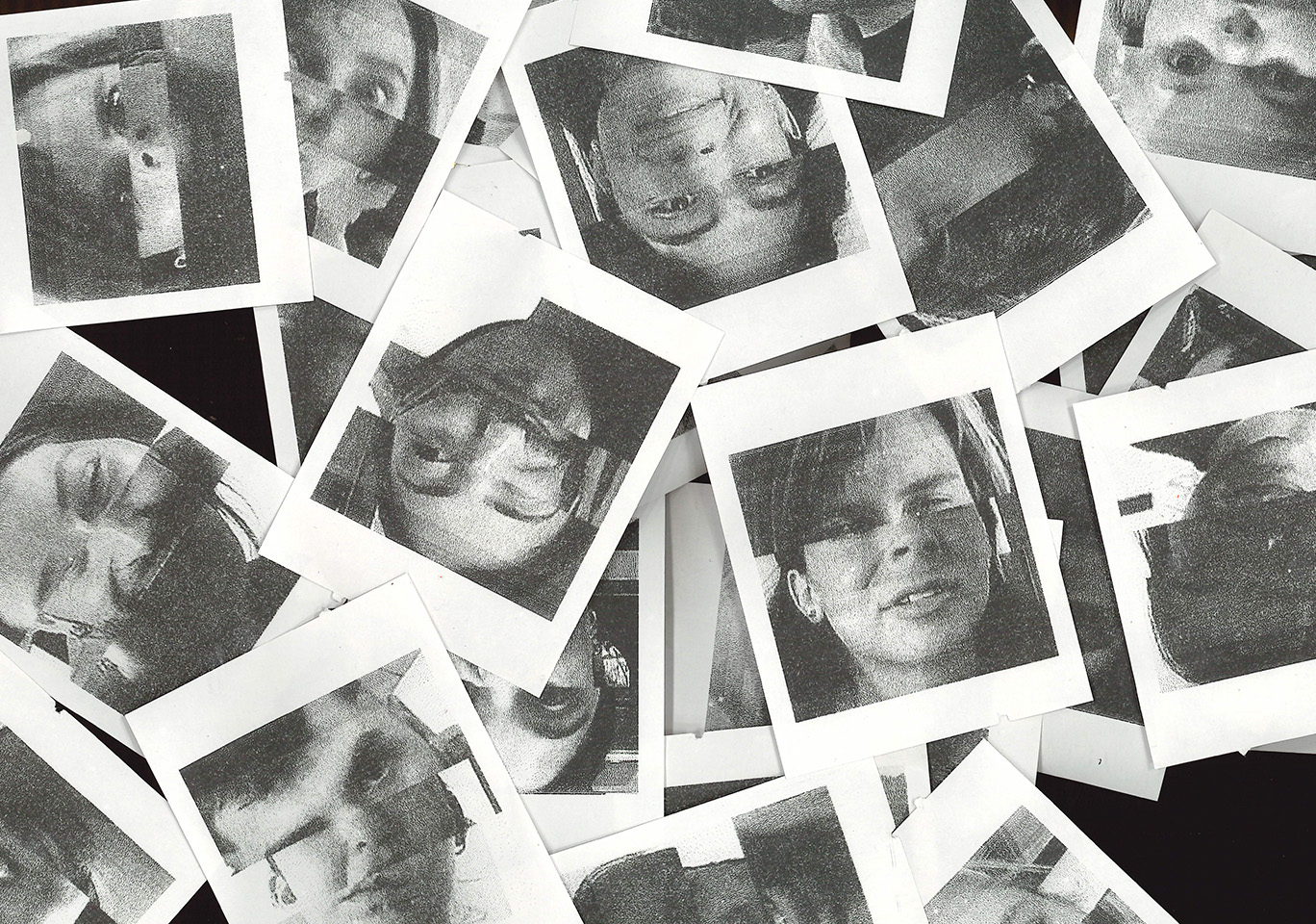
Complicator takes physical form in a live installation. A webcam, a Raspberry Pi, and a thermal printer turn everyone who walks through the space into source material. Each face is added to the archive and used as a query at once, so every new composite is built from the faces that came before. A collective self-portrait of a room that no longer exists.
The Tools
Six experiments that reorganize image archives. They recycle what you already have. The machine measures, matches, and organizes. You decide what it means.
gridMatcher
Tonal grid matching from pure image statistics. Finds images that share a texture, tone, or structure.
stitcher
Hover an edge of an image and it finds the ones whose opposite edge best continues it, like puzzle pieces.
contrastExplorer
Drag a patch across an image to find others that share its qualities in that region.
face/bodyCollage
Inspired by the exquisite corpse. Dissects and reassembles faces and bodies into new ones, in real time.
poseMatcher
A live mirror that finds archived photos matching your expression or hand gesture.
bigSort
Built on CLIP. Sorts by color, content, or a queried mood, setting, or expression.
Built with OpenCV, MediaPipe, and CLIP. Running locally. The tools will be released publicly soon.
Three Archives
Each tool was tested across three archives, each with a different relationship to the image.
Personal
892 images from my own camera.
Public
1,500 images from Open Images V7, with no curatorial voice.
Live
A webcam archive captured in real time during the installation.
The Book
A book documents my process, from research and references to the thinking behind each tool.